39 Day African Exploration (Nairobi to Livingstone Overland)
Overview Itinerary Departure Dates Activities Inclusions & Exclusions

39 Day African Exploration (Nairobi to Livingstone Overland)

39 Day African Exploration (Nairobi to Livingstone Overland)
Why book this tour? Budget Nairobi to Livingstone Overland through East Africa taking in the highlights. Climb on board vehicles that are designed for the rough African roads as you...
161350.00
Tour Type Icon

Price From

R161,350

Activity Package (Compulsory) USD 1025

Gorilla Trekking (Compulsory) R19400

check availability View Tour Dates

*Currency estimated. Tours are Based in South African Rand (ZAR) and converted on the day. Some Tours are Based in EUR/USD

Latest
2025 Tripadvisor Travelers Choice:
Best Travel Company for Adventure Holidays

review.io

ZAR

https://schema.org/InStock

Calendar

Length

39 days

Tour Type

Tour Type

Camping

flight Starts

Starts

Nairobi

Comfort Level

Comfort Level

Classic

Flight Ends

Ends

Livingstone

Age Range

Age Range

16 - 75 Years

Tour SKU

Tour SKU

CAE2514

Operated in

Operated in

English Guided

Group Size

Group Size

Max 18

LET THE EXPERTS HELP

What are you looking for?

Get advice and suggestions to make this your perfect trip.

or call us on:

+27 (0) 21 448 0997

Why You'll Love this Tour

This Nairobi to Livingstone Overland tour provides a comprehensive insight into East Africa’s finest highlights and gives you a glimpse of what Southern Africa has to offer. We go primate trekking in Uganda and explore the rippling Masai Mara and flat plains of the Serengeti. See the monumental Ngorongoro Crater and the magnificence of Mt Kilimanjaro. Relax on the sun-kissed beaches on the tropical island of Zanzibar, view the picturesque Lake Malawi and the powerful Victoria Falls.

39 Day African Exploration (Nairobi to Livingstone Overland)

Why book this tour? Budget Nairobi to Livingstone Overland through East Africa taking in the highlights. Climb on board vehicles that are designed for the rough African roads as you wind your way through the Masai Mara, Serengeti, Ngorongoro Crater and Zanzibar. Don't miss out on this popular route!

https://africanoverlandtours.com/wp-content/themes/africanoverlandtours/images/placeholder-img.jpg

2025-07-31T17:14:13+00:00

https://www.youtube.com/embed/0Tq_RAx_RcY

African Overland Tours

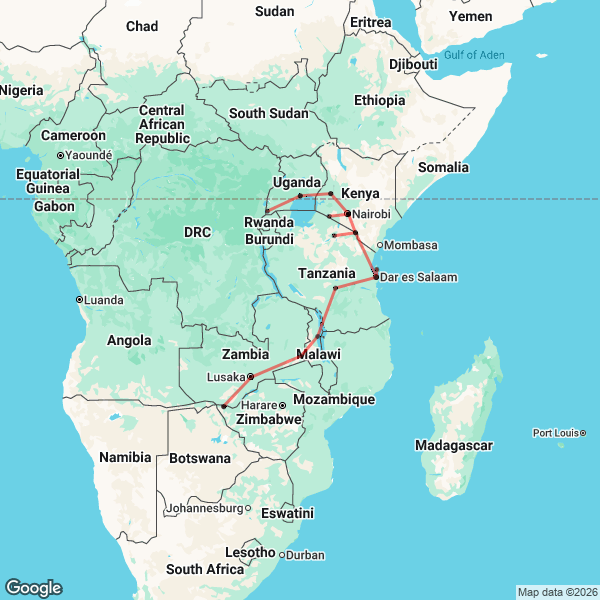
39 Day African Exploration (Nairobi to Livingstone Overland) Map
Download Full Itinerary

Itinerary Download

"*" indicates required fields

Full Name*

ITINERARY

Expand All
39 Day African Exploration (Nairobi to Livingstone Overland)
["Solo Travellers","Couples","Adult Only","Friends","Seasoned Travellers","Honeymoon","Young & Lively","Expeditions","Groups"]
P39D
25
1

We begin with an early departure from Nairobi as the group descends into the iconic Great Rift Valley. Travelers stop at a scenic lookout point to appreciate the massive escarpments that stretch across the African continent before heading to the valley floor. The destination for the night is Lake Nakuru National Park, a prolific wildlife haven known for its diverse birdlife and mammals. During the afternoon game drive, visitors may see a vibrant fringe of flamingos on the soda lake alongside rhino, lion, and leopard.

Accommodation
Accommodation

Punda Milias Camp or similar

Meals
Meals

Lunch, Dinner

Included Highlights
Included Highlights

Lake Nakuru National Park Game Drive

Distance
Distance

± 190 km

Driving Time
Driving Time

± 4 – 5 hours

2

Leaving Lake Nakuru, the tour continues northwest toward Eldoret while climbing in altitude through the Kenyan highlands. A highlight of the day is crossing the Equator, where the group takes time to learn about its significance and snap commemorative photos. The evening is spent at a unique campsite outside of Eldoret, which is the fifth-largest and fastest-growing town in Kenya. This site features ancient “Sirikwa holes,” which are archaeological excavations believed to have been used as roofed dwellings in a bygone age.


Accommodation
Accommodation

Naiberi River Campsite & Resort or similar

Meals
Meals

Breakfast, Lunch, Dinner

Distance
Distance

± 150 km

Driving Time
Driving Time

± 3 – 4 hours

3

Today, the journey crosses the border into Uganda, a country famously dubbed the “Pearl of Africa” by Winston Churchill for its natural beauty. Travelers will experience a rich mosaic of cultures and friendly people as they move toward the capital city. The group camps in Kampala, a bustling city built on several hills and filled with vibrant markets and busy taxi stands. This stop provides a first taste of the energy found in one of East Africa’s most dynamic urban centers.


Accommodation
Accommodation

Red Chilli Hideaway or similar

Meals
Meals

Breakfast, Lunch, Dinner

Distance
Distance

± 400 km

Driving Time
Driving Time

± 9 – 10 hours (excluding border crossing)

4

From Kampala, the tour heads west through a landscape of fertile green hills, banana plantations, and tangled forests. Along the route, keep an eye out for the striking Ankole cattle, known for their exceptionally long, curving horns. After crossing the Equator once again, the group arrives at the accommodation near the chimpanzee trekking area. The evening offers a chance to relax and mingle with the local community in this lush, mountainous region.

Accommodation
Accommodation

Craters Campsite & Country Lodge or Simba Safari Camp or similar

Meals
Meals

Breakfast, Lunch, Dinner

Distance
Distance

± 400 km

Driving Time
Driving Time

± 9 – 10 hours

Please Note
Please Note

Some new group members may be starting their tour in Kampala today!

5

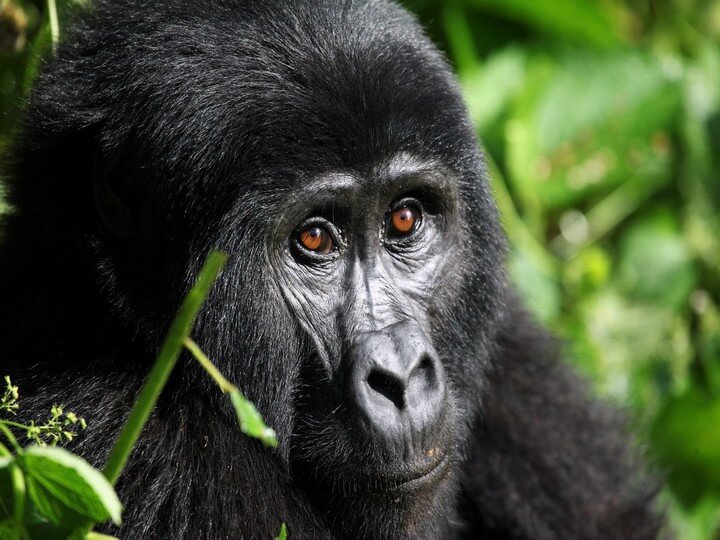
The morning is dedicated to trekking for chimpanzees in either the Kalinzu Forest or the Kyambura Gorge. Because these primates live mostly in the trees, viewing involves peering high into the dense forest canopy. Observing man’s closest relative in their natural habitat is often cited as a deeply memorable experience. Depending on the size of the group and permit availability, these treks may be scheduled at different times across days 4, 5, or 6.


Accommodation
Accommodation

Craters Campsite & Country Lodge or Simba Safari Camp or similar

Meals
Meals

Breakfast, Lunch, Dinner

Included Highlights
Included Highlights

Chimpanzee Trekking

Distance
Distance

± 50 km (each way)

Driving Time
Driving Time

± 1 – 2 hours (each way excluding trekking)

Please Note
Please Note

Trekking permits will be issued by the wildlife authority in groups of up to 8 people per group. Depending on our group size, the trek may be spread over three days.

6

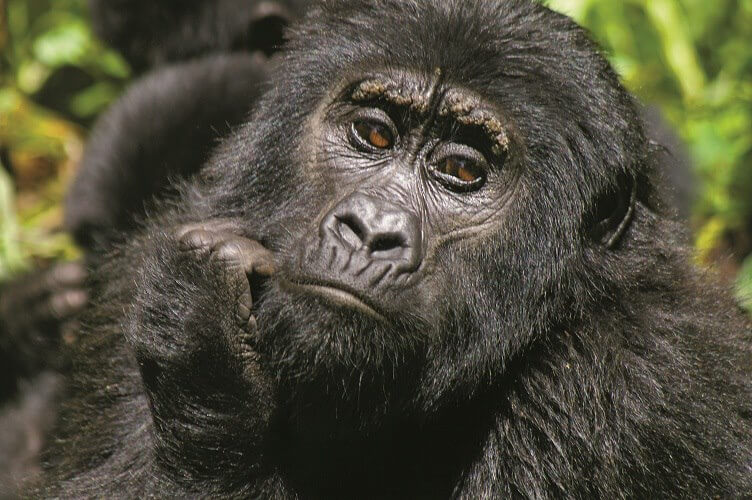
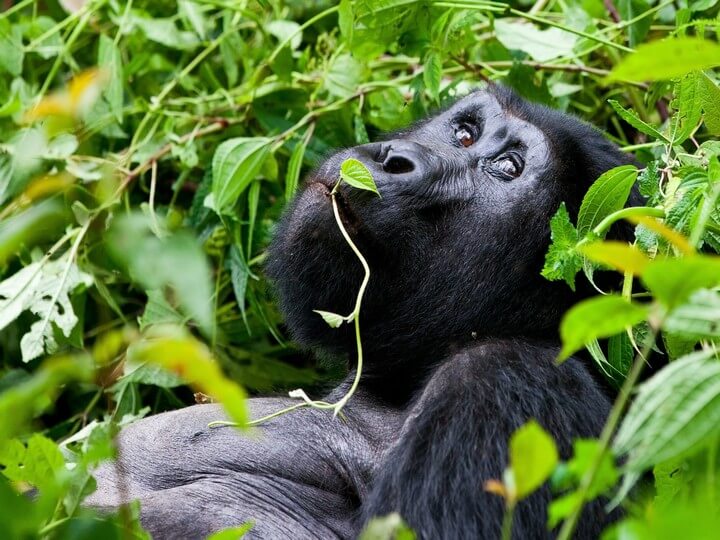
The group travels to the stunning Lake Bunyonyi, the second deepest lake in Africa, which serves as the base for mountain gorilla excursions. Over these three days, the group is split so that everyone has the opportunity to participate in gorilla trekking in Bwindi Impenetrable National Park. The trek involves hiking into the thick rainforest with local guides to spend one hour observing a gorilla family led by a silverback. Those not trekking on a given day can enjoy optional activities at the lake, such as hiring canoes, visiting a local orphanage, or taking village walks. This flexible schedule ensures that strict limits on daily visitors to the gorillas are respected while keeping the rest of the group engaged with the local culture and scenery.


Accommodation
Accommodation

Lake Bunyonyi Overland Stop or similar

Meals
Meals

Breakfast x3, Lunch x3, Dinner x3

Included Highlights
Included Highlights

Gorilla Trek

Optional Activities
Optional Activities

Island Boat Trips – USD 25 – USD 80, Village Walk – USD 10, Traditional Dance – USD 60, Bird Watching – USD 20, Canoe Hire – USD 10

Distance
Distance

Day 6: ± 200 km, Day 7: ± 80 km each way, Day 8: ± 80 km each way

Driving Time
Driving Time

Day 6: ± 5 – 6 hours, Day 7: ± 2 – 3 hours each way, Day 8: 2 – 3 hours each way

Please Note
Please Note

Gorilla trekking days may vary based on permit availability, so please treat this itinerary as a guideline. If you are not trekking, the days are free for relaxation or optional activities around Lake Bunyonyi.

7

Following the trekking experiences, the group retraces their path back across the Equator toward Kampala. The long drive passes through lush pasture lands and skirts the northern reaches of Lake Victoria, the largest lake in Africa. Kampala is known as a hotspot for excellent food and entertainment, offering a vibrant nightlife for those interested. This stop provides a final chance to enjoy the legendary hospitality and friendliness of the Ugandan people before heading east.


Accommodation
Accommodation

Red Chilli Hideaway or similar

Meals
Meals

Breakfast, Lunch, Dinner

Trip Highlights

Equator Crossing

Distance
Distance

± 550 km

Driving Time
Driving Time

± 11 – 12 hours

Please Note
Please Note

Some group members may be ending their tour in Kampala today.

8

The group drives a short distance from Kampala to Jinja, a town famously situated where the Nile River flows out of Lake Victoria. This location is significant as the spot where explorer John Hanning Speke identified the source of the Nile in 1862. Travelers spend three nights at a campsite on grassy banks overlooking the powerful river, providing a perfect base for numerous activities. Days 11 and 12 are free, allowing adrenaline enthusiasts to tackle world-class rapids during a white-water rafting excursion. Other options for these days include quad biking, mountain biking, or contributing to the community through the “Softpower” school improvement project. For a more relaxed experience, visitors can enjoy a Nile River cruise or simply explore the local town and its markets. This stay in Jinja marks a transition point in the journey, as some group members may finish their tour here before the remaining travelers prepare to cross back into Kenya.


Accommodation
Accommodation

Nile River Explorers or similar

Meals
Meals

Breakfast x3, Lunch x3, Dinner x3

Optional Activities
Optional Activities

Quad Biking – USD 85, White-water Rafting – USD 160, Nile River Cruise, Nile SUP – From USD 20, Kayak – From USD 20, Fishing Trips – From USD 80, and Mountain Biking – From USD 30, Community School Project – USD 50

Distance
Distance

± 80 km

Driving Time
Driving Time

± 3 – 4 hours

Please Note
Please Note

A minimum of 4 participants are required for the Nile Boat Cruise

9

Leaving the banks of the Nile, the expedition retraces its steps across the border back into Kenya. The journey involves approximately eight to nine hours of driving through the changing East African landscape. The night is spent at the familiar Naiberi River Campsite in Eldoret, which serves as a convenient midpoint for the return toward Nairobi.


Accommodation
Accommodation

Naiberi River Campsite & Resort or similar

Meals
Meals

Breakfast, Lunch, Dinner

Distance
Distance

± 300 km

Driving Time
Driving Time

± 8 – 9 hours (excluding border crossing)

10

Today we cross the Equator once more and make our way South, towards our base just outside of the Kenyan capital, Nairobi.

The next day is for relaxing, and you are free to explore the city and surrounding areas. Your guide can help arrange optional excursions, like diving into the city’s shopping, markets, bars, and restaurants; visiting the National Museum of Kenya; indulging at Carnivore Restaurant; embarking on a Nairobi National Park safari; encountering elephants at the Sheldrick Wildlife Trust Elephant Nursery; meeting giraffes at the Giraffe Centre; or exploring the Karen Blixen Museum. Alternatively, simply relax and enjoy some well-deserved downtime.


Accommodation
Accommodation

Hotel Boulevard or similar – Twin / triple share rooms with en-suite facilities

Meals
Meals

Breakfast x2

Distance
Distance

± 250kms

Driving Time
Driving Time

5 – 6 hours

Optional Activities
Optional Activities

SWT Elephant Nursery US$ 20, Giraffe Centre US$ 10, Karen Blixen Museum US$ 20

Please Note
Please Note

As some journeys end in Nairobi, take a moment to celebrate the shared memories and friendships made along the way.

11

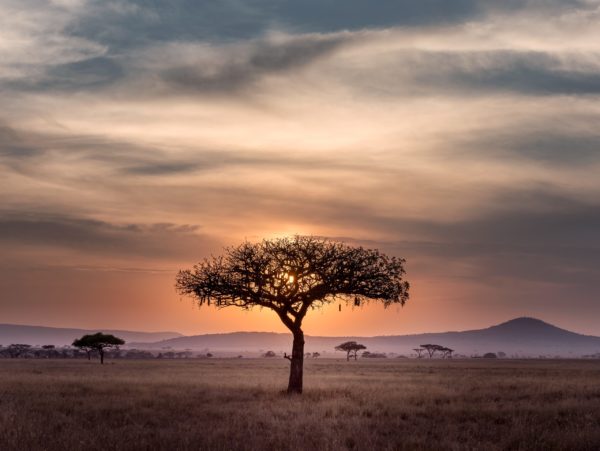
Departing the city early in the morning, we travel back across the Great Rift Valley, this time to the Masai Mara National Reserve, enjoying the splendid views on the way. We travel in small, specialized vehicles, enabling us to have much more intimate wildlife views. Two nights will be spent camping on the edge of the Reserve, giving you time to explore the park on morning and afternoon game drives. The magnificent continent of Africa is represented extremely well by the vast, sweeping plains, the low hanging acacia trees, the abundant fauna and flora and the awe-inspiring view of the horizon.

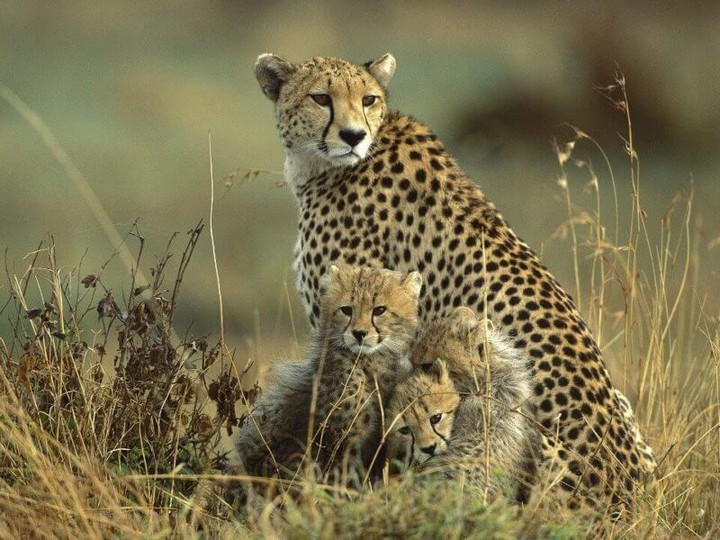
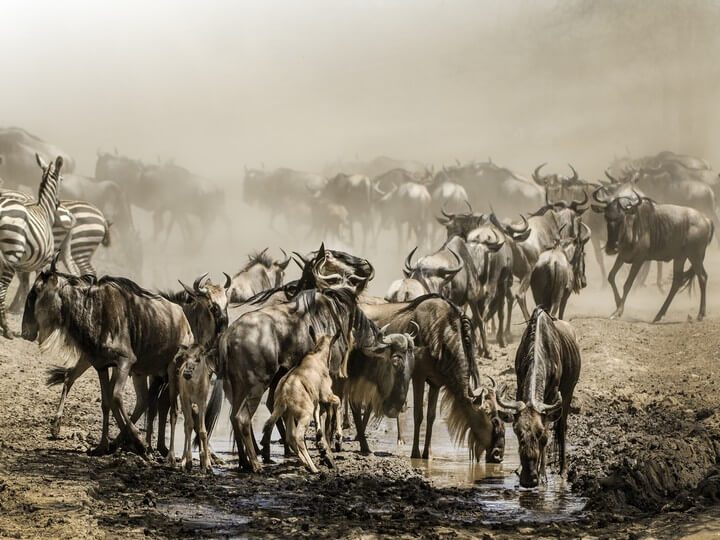
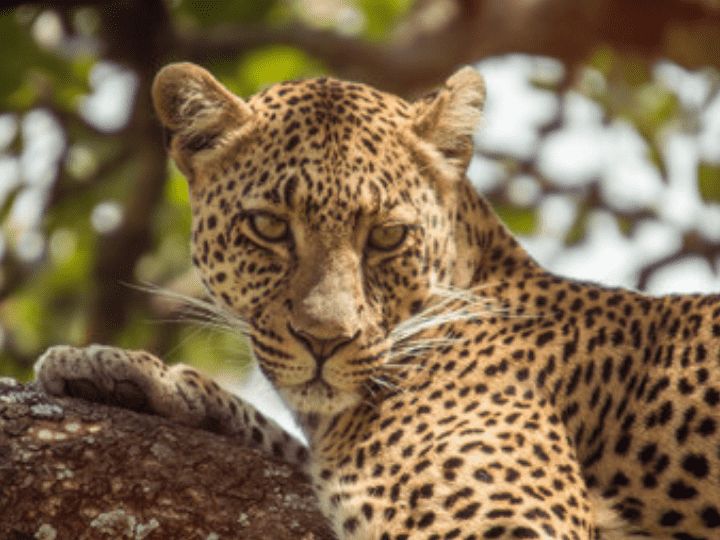
The ‘Mara’ is crossed each year between the months of July and October by massive herds of wildebeest, zebra and other grazing animals during their migration from the adjoining Serengeti plains toward the southern Tanzania. The length of the animals’ stay is dependent on rainfall and subsequent grass growth throughout the rainy season. Predators, such as lion, cheetah and leopard as well as scavengers, such as hyena and vultures, shadow the grazing animals in wait. This enormously spectacular congregation of wildlife forms a fantastic display of Africa’s natural resources and inhabitants. This being said however, the Mara is still excellent for game viewing at most any time of year and, regardless of when you can visit, we aim to see as many of Africa’s ‘Big Five’ as possible (elephant, lion, rhino, buffalo and leopard) as well as an array of other wildlife.

It is from the Mara that we return to Nairobi where we will usually have a night of luxury in a comfortable bed.


Accommodation
Accommodation

Masai Mara – Enchoro Wildlife Camp or similar – Twin / triple shared pre-erected tents with en-suite facilities, Nairobi – Hotel Boulevard or similar – Twin / triple shared rooms with en-suite facilities

Meals
Meals

Breakfast x2, Lunch x2, Dinner x2

Included Highlights
Included Highlights

Masai Mara Game Reserve*

Distance
Distance

± 300kms (first day), ± 300kms (third day)

Driving Time
Driving Time

5 – 6 hours (first day), Full days including game drives (second day), 5 – 6 hours (third day)

12

The tour crosses the Namanga border into Tanzania and proceeds to Arusha, the country’s “safari capital”. Arusha sits in the shadow of Mount Meru and is a bustling city filled with colourful markets and safari vehicles. After exploring local curio shops, the group moves to a campsite on the open plains west of the city to prepare for the Serengeti excursion. If time allows, travelers can enjoy a walk to a nearby Maasai village to gain insight into local life.

Accommodation
Accommodation

Meserani Snake Park or similar

Meals
Meals

Breakfast, Lunch, Dinner

Optional Activities
Optional Activities

Camel Ride – USD 5, Maasai Village Walk with Resident Guide – USD 10

Distance
Distance

± 290 km

Driving Time
Driving Time

± 6 – 7 hours (excluding border crossing)

Please Note
Please Note

Some new group members may be starting their tour in Nairobi today!

13

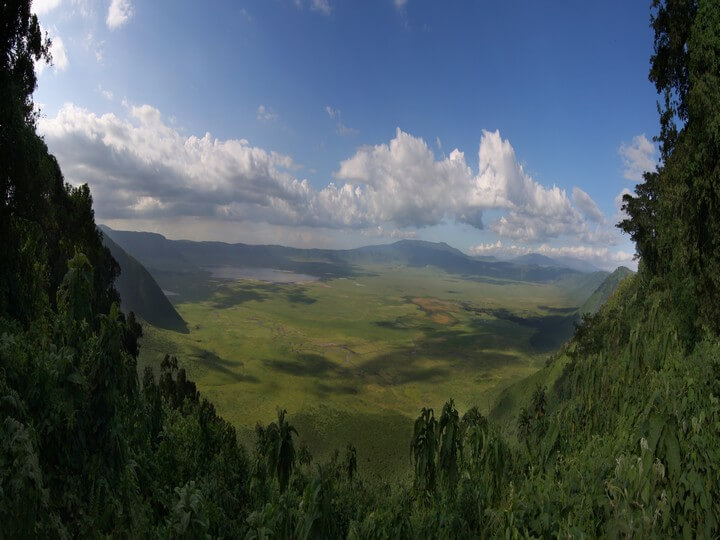
The group transfers to smaller vehicles to enter the Ngorongoro Conservation Area and descend onto the Serengeti plains for an afternoon game drive and unfenced camping. The name Serengeti means “the place where the land moves on forever,” and its vast ecosystem is home to an enormous variety of predators and grazing animals. After a morning game drive the next day, the tour ascends the outer wall of the Ngorongoro Crater to camp on the cold rim at an altitude of 2,400 meters. An early morning descent the following day allows for intensive game viewing on the crater floor, where almost all large mammals, except giraffes, can be found. The excursion concludes with a final view from the rim before the group retraces its steps back to the campsite in Arusha.

Accommodation
Accommodation

Seronera Camp or similar (day 20), Simba Camp or similar (day 21), and Meserani Snake Park or similar (day 22)

Meals
Meals

Breakfast x3, Lunch x3, Dinner x3

Optional Activities
Optional Activities

Camel Ride US$5

Distance
Distance

Day 20: ± 300 km, Day 22: ± 150 km

Driving Time
Driving Time

Day 20, 21, and 22: Full day including game drives

14

Heading south from Arusha, the group passes through the town of Moshi on a long driving day. If the skies are clear, travelers will be treated to a magnificent view of snow-capped Mount Kilimanjaro, Africa’s highest peak. The night is spent in the historic trading port of Bagamoyo at a campsite near the palm-fringed beaches of the Indian Ocean.

Accommodation
Accommodation

Firefly Camp or similar

Meals
Meals

Breakfast, Lunch, Dinner

Distance
Distance

± 600 km

Driving Time
Driving Time

± 12 – 13 hours

15

A short drive leads to Dar es Salaam, Tanzania’s main port and a major hub of industry. This hot and humid city features a blend of high-rises, colourful markets, and Arab-influenced architecture. The group sets up camp on a beach just outside the city to enjoy the balmy sea breeze while preparing for the Zanzibar trip.

Accommodation
Accommodation

Kipepeo Beach Village or similar

Meals
Meals

Breakfast, Lunch, Dinner

Distance
Distance

± 70 km

Driving Time
Driving Time

± 3 – 4 hours

16

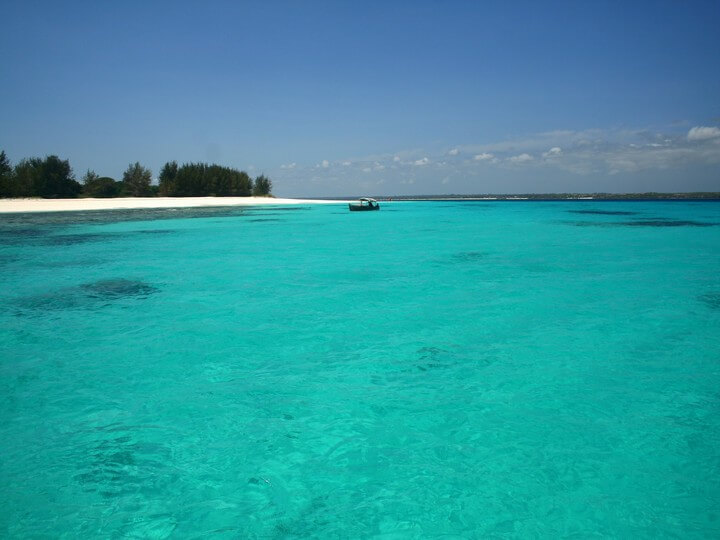
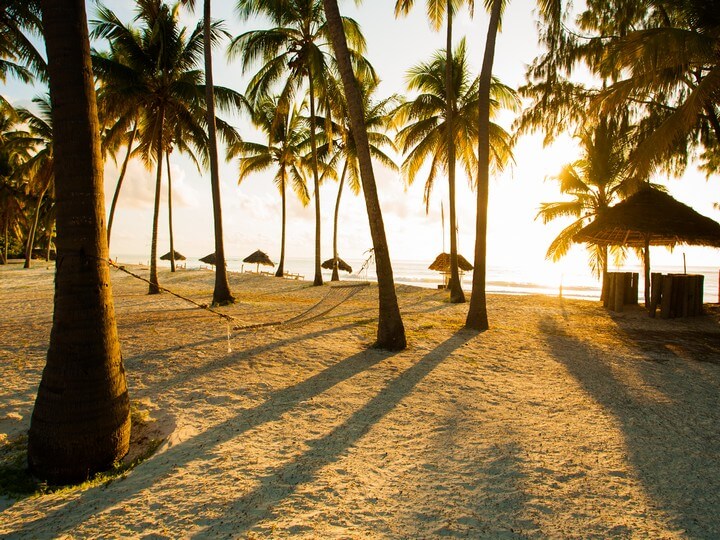
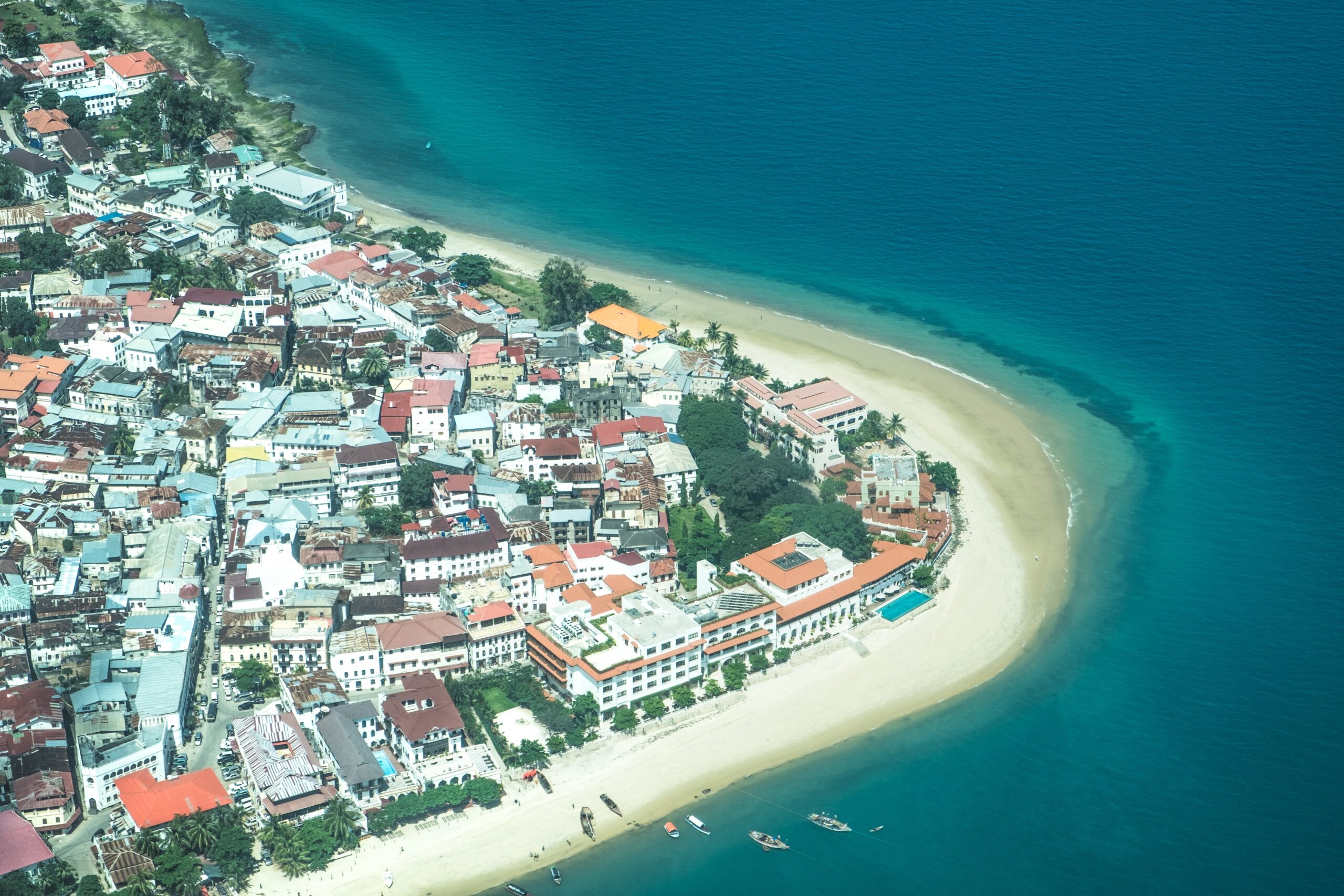
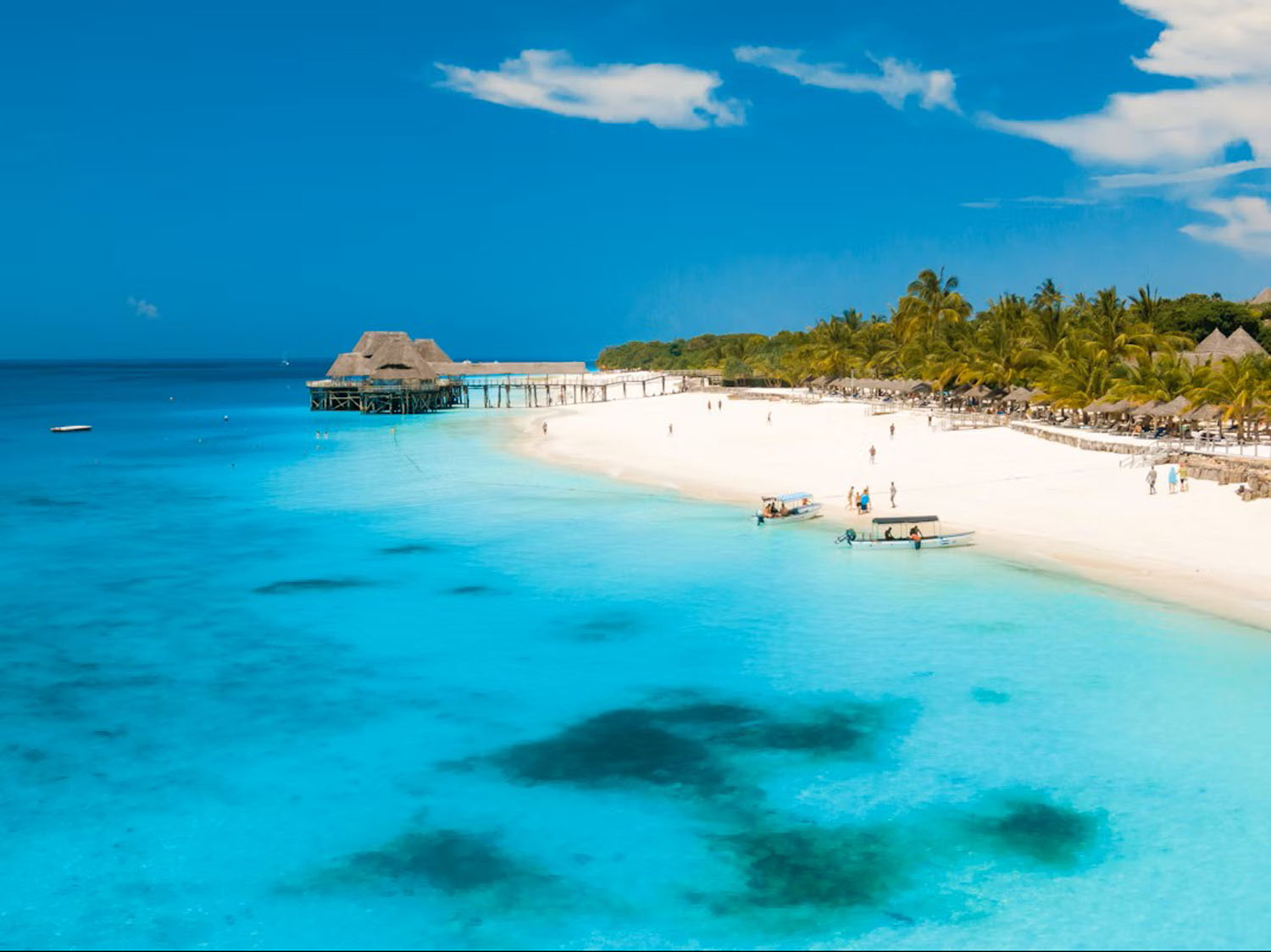
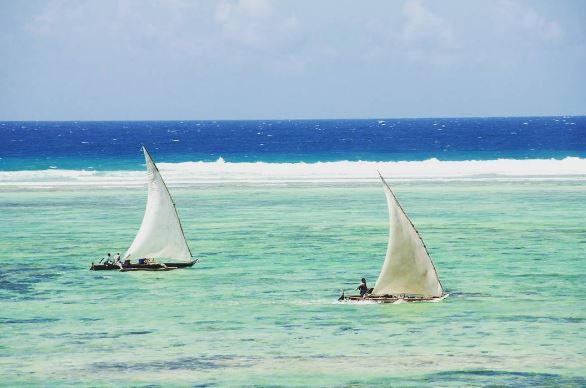
The final stage of the journey begins with a ferry crossing to Stone Town, the historic heart of Zanzibar Island. Travellers have a free afternoon to explore winding cobbled alleys, bazaars, and mosques, while reflecting on the island’s history as a hub for both the spice trade and the slave trade. After a night in the capital, the group transfers to the northern beaches of Nungwi, renowned for their sun-kissed white sand and sparkling turquoise waters. This area offers a variety of optional activities, including scuba diving trips to colourful reefs or snorkelling in the rich marine environment. A subsequent free day in Nungwi allows for a personal pace, whether browsing local markets, enjoying a beach massage, or relaxing in a hammock. The beach is a lively place where locals sell various wares and offer henna tattoos, adding to the vibrant atmosphere. To round off the island experience, visitors can join a sunset dhow cruise or enjoy music at the nearby beach bars before the tour concludes.

Accommodation
Accommodation

Safari Lodge or similar (day 25) and Amaan Beach Bungalows or similar (days 26 – 27)

Meals
Meals

Breakfast x3

Included Highlights
Included Highlights

Ferry to Zanzibar

Optional Activities
Optional Activities

Spice Tour – USD 35, Slave Markets – USD 10, Arabic Fort – USD 5, Palace Museum – USD 10, Scuba Diving – USD 130, Yacht Trip – USD 120, Snorkelling Day Trip – USD 40, Massages – From USD 20

Distance
Distance

Day 25: ± 20 km, Day 26: ± 65 km

Travel Time
Travel Time

Day 25: ± 4 – 5 hours including Ferry, Day 26: ± 1 – 2 hours

Please Note
Please Note

Basic B&B accommodation is included, while other meals are at your own expense for flexibility. The stay typically includes one night in Stone Town and two nights at a northern beach. Your tour leader will be available to help book activities.

17

The morning we have time to do any last minute shopping or enjoy one last swim before hopping on the ferry back to the African mainland and Dar es Salaam. From there, it’s onward to our camp on the coast for the evening.

Accommodation
Accommodation

Kipepeo Beach Village or similar – Camping in twin share tents with shared facilities

Meals
Meals

Breakfast, Dinner

Distance
Distance

± 85 km and Zanzibar Ferry

Travel Time
Travel Time

5 – 6 Hours including Zanzibar Ferry (excluding stops)

18

Leaving the warm Atlantic coast and bustling city of Dar es Salaam behind, we travel inland through Mikumi National Park. With some luck, we may spot forest elephant or giraffe. Our campsite is located near the park entrance. This evening, we enjoy sundowners at the local bar/restaurant and relax around the campfire. Depending on time this afternoon, there is an optional game drive exploring Mikumi National Park.


Accommodation
Accommodation

Tan-Swiss Lodge – Camping in twin share tents with shared facilities

Meals
Meals

Breakfast, Lunch, Dinner

Distance
Distance

± 330 km

Driving Time
Driving Time

8 – 9 hours (excluding stops)

Optional Activities
Optional Activities

Mikumi Game Drive US$150

19

After breakfast we head off for Kisolanza Farmhouse at an altitude of 1600m, ensuring a pleasant crisp and fresh climate in one of the most scenic areas the Southern Highlands of Tanzania has to offer. Kisolanza has been home to the Ghaui family for over 70 years and remains a working farm providing organic meat and vegetables to surrounding markets and the city of Dar es Salaam. Kisolanza Farmhouse is famous for their magnificent hot showers, delectable chocolate brownies, hot chocolate and Amarula that can be purchased at their quaint candlelit bar. Tonight, you’ll enjoy the comfort and hospitality of a well-known farmhouse campsite, perfectly situated halfway between the ocean and the Malawi border. It’s a welcome respite on your journey, offering a chance to recharge and connect with fellow travelers.


Accommodation
Accommodation

Kisolanza Farmhouse – Camping in twin share tents with shared facilities

Meals
Meals

Breakfast, Lunch, Dinner

Distance
Distance

± 250 kms

Driving Time
Driving Time

± 5 – 6 hours (excluding stops)

20

Escape to the tranquil Utengule Coffee Lodge in Tanzania’s Southern Highlands! Enjoy breathtaking views of the East African Rift Valley, relax by the pool, or play squash, tennis, and more. Coffee lovers can partake in an optional guided tour of the plantation, including a roasting demo and a delicious cup of home-grown coffee.

Following our last night in Tanzania, we head through abundant mountain passes, rich grazing land, and banana and tea plantations towards the Songwe border post and into Malawi.

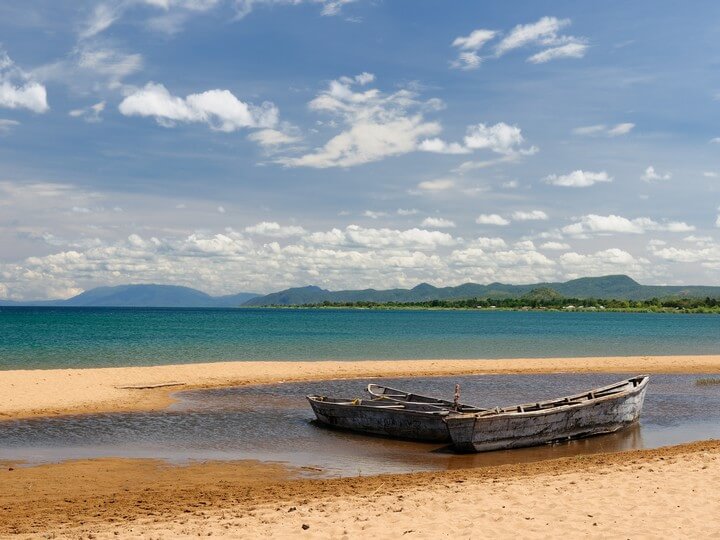
Formerly ‘Lake Nyasa’, Lake Malawi covers almost an entire fifth of the country’s area and provides the source of livelihood for majority of the Malawi people. Fishermen, fish traders, and canoe and net makers all ply their trades here, and a common sight is that of a fisherman in his Bwato (dugout canoe made from hollowed out tree trunk) fishing on the lake at the break of day. The lake has the highest number of endemic freshwater fish species of any in the world.

Unwind and embrace the laid-back charm of a lakeside village! Relax on the sandy beach, stroll through the village, or immerse yourself in the local culture at the craft market. Learn the art of woodcarving and create your own souvenir, challenge yourself with a game of Bao, or haggle for unique treasures.


Accommodation
Accommodation

(Day 1), Utengule Coffee Lodge or similar – Camping in twin share tents with shared facilities, (Day 2), Chitimba Beach Camp – Camping in twin share tents with shared facilities

Meals
Meals

Breakfast x2, Lunch x2, Dinner x2

Distance
Distance

± 550kms

Driving Time
Driving Time

± 11 hours

Optional Activities
Optional Activities

Utengule Coffee Tour, Livingstonia Day Hike US$10

Please Note
Please Note

The crew may make alterations to the published itinerary. Therefore, please treat the Malawi section of the itinerary as a guideline only.

21

After a peaceful morning, we embark on a scenic drive to Mzuzu, the capital of the northern region and the third largest town in Malawi, where we stop for a short while to gather supplies and to take a look at the markets before we arrive at Ngala Beach Lodge.

Spend the following day participating in some of the water sports available here such as snorkelling and diving or feel free to spend the day relaxing and enjoying the fresh waters of Lake Malawi.


Accommodation
Accommodation

Ngala Beach Lodge or similar – Camping in twin share tents with shared facilities

Meals
Meals

Breakfast x2, Lunch x2, Dinner x2

Distance
Distance

± 300 km

Driving Time
Driving Time

6 – 7 hours (excluding stops)

Optional Activities
Optional Activities

Kayak Hire, Snorkelling Trip from US$115, Ngala Cultural Village Walk US$6, Dwambadzi Waterfall Hike from US$65

22

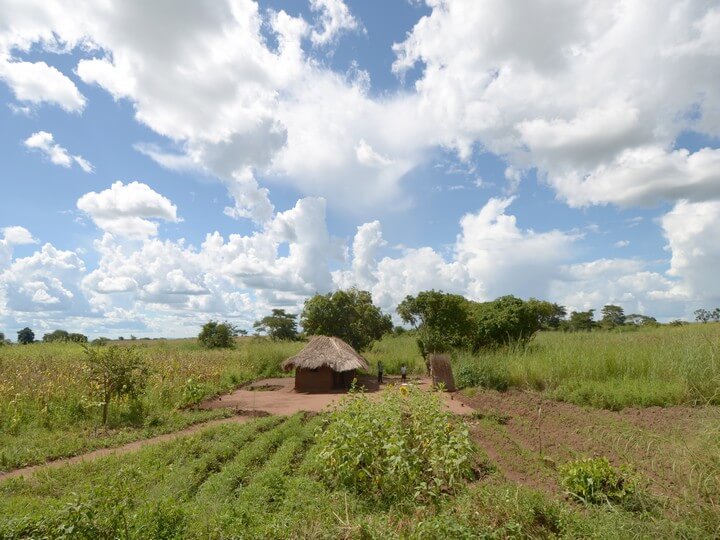
Bid farewell to the stunning Lake Malawi and embark on a scenic journey through Nkhotakhota Game Reserve towards the Zambian border. After completing border formalities, continue to Petauke, a fertile region known for its agricultural abundance, producing maize, cotton, sunflower, soya beans, and other crops.


Accommodation
Accommodation

Chimwemwe Lodge or similar – Camping in twin share tents with shared facilities

Meals
Meals

Breakfast, Lunch, Dinner

Distance
Distance

± 550 kms

Driving Time
Driving Time

± 11 – 12 hours (excluding stops/border crossing)

23

Leaving early, we take the Great Eastern Road through lush country and small villages, crossing the Luangwa River to Zambia’s capital. Lusaka is Southern Africa’s fastest growing city, boasting a population of approximately 1.7 million people and is situated on the southern plateau at an elevation of 1300m with four main highways running north, south, east and west – each to different parts of Africa. Our campsite this evening is set in a tranquil and relaxing area on a farm.


Accommodation
Accommodation

Eureka Camp – Camping twin share tents with shared facilities

Meals
Meals

Breakfast, Lunch, Dinner

Distance
Distance

± 420km

Driving Time
Driving Time

±8 – 9 hours (excluding stops)

24

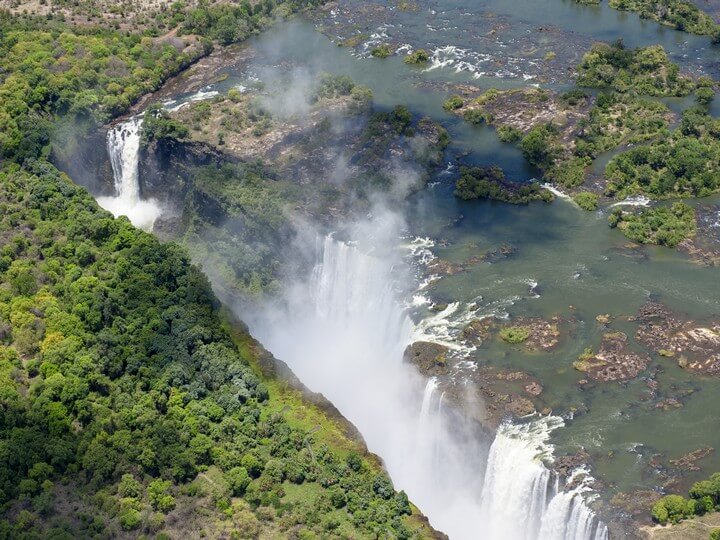
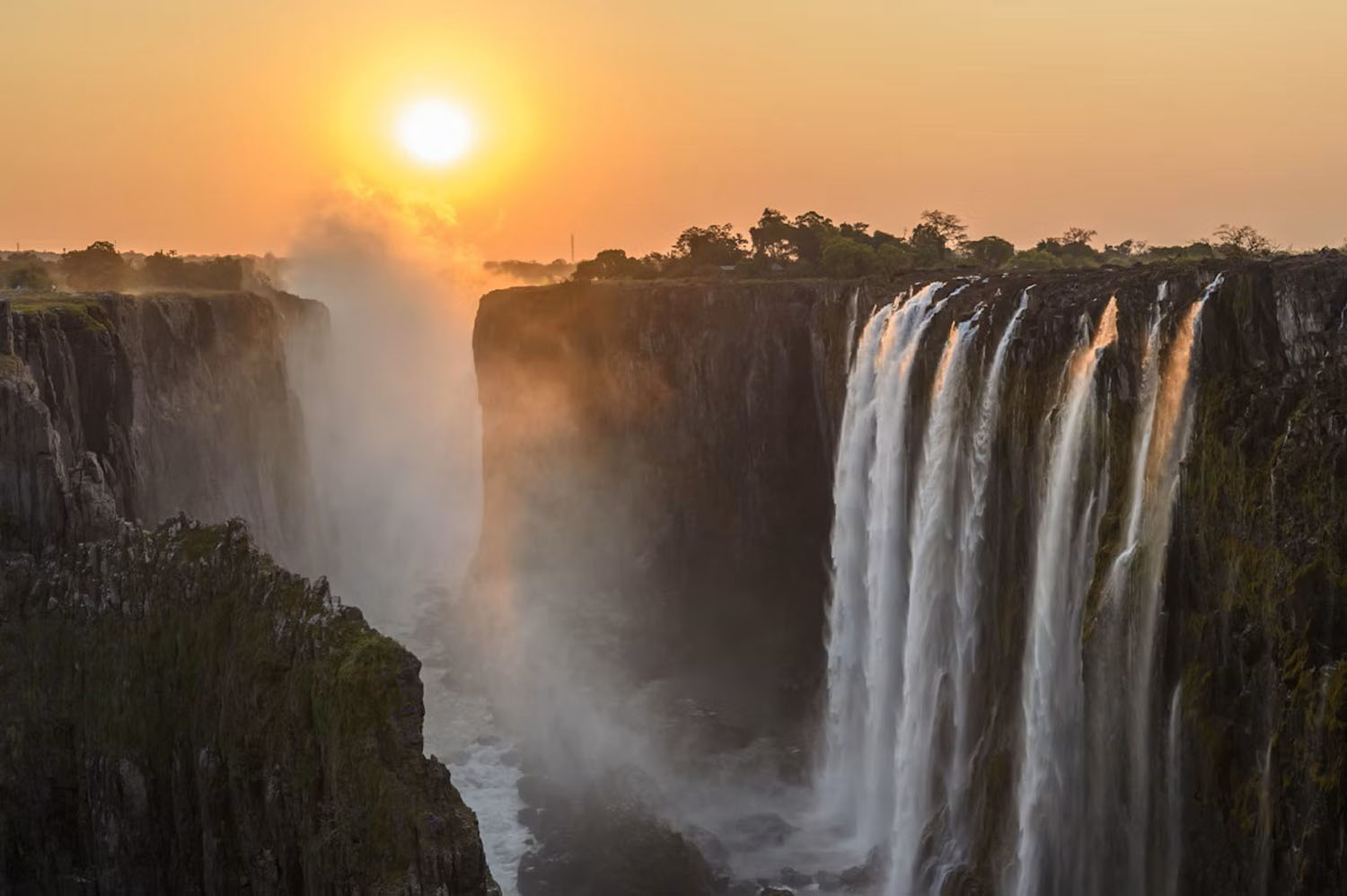
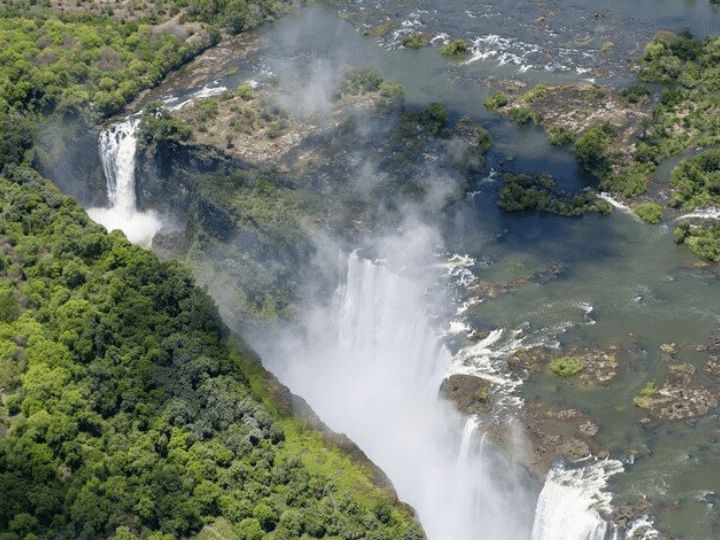
At the start of the day, we head south toward Livingstone and set up camp at the Waterfront campsite located on the banks of the Zambezi River which is just a few kilometres from Victoria Falls. We make a visit to the Victoria Falls and at various times of the year, the spray from this mighty waterfall can be seen from up to 30 kilometres away, hence the local name Mosi oa Tunya meaning ‘the smoke that thunders’. During the excitement of this excursion, try not to forget your raincoat to protect you and your camera from splashes of water. The camp is incredible, and management will provide a brief on all activities in the area (including rafting, canoeing, bungee jumping, abseiling, gorge swinging, horse riding, scenic flights, river cruises, etc.), allowing you to plan your time accordingly over the next four days.


Accommodation
Accommodation

Victoria Falls Waterfront or similar – Camping in twin share tents with shared facilities

Meals
Meals

Breakfast

Distance
Distance

± 470 km

Driving Time
Driving Time

±9 – 10 hours (excluding stops)

Please Note
Please Note

For the sake of practicality, meals in Livingstone are restricted to breakfasts. This allows you to take on half day or full day activities (some of which include lunch) without having to be back with the group at mealtimes. The Waterfront restaurant overlooks the Zambezi River and offers a good selection of reasonably priced meals and snacks throughout the day (allow US$15 – US$30 per meal). Relax and enjoy these few days at your own leisure. Alternatively, take a taxi into Livingstone and try the local fare.

25

During these days you are free to explore the town area to the full. Apart from the long list of adventure activities available, ensure that you take time out to browse through the bustling markets and museum in nearby Livingstone. You could also spend some time here volunteering a day for a local charity project, adventuring on a day trip to the Victoria Falls township in Zimbabwe, or simply unwinding on the gorgeous campsite deck while watching the water of the Zambezi River flow swiftly past on its way through to Victoria Falls.

The following day we enjoy breakfast before the tour comes to an end. We recommend spending an extra day to participate in the variety of activities available on offer here.


Accommodation
Accommodation

The Victoria Falls Waterfront – Camping in twin share tents with shared facilities

Meals
Meals

Breakfast x2

Optional Activities
Optional Activities

Bungee Jumping US$160, Full Day Abseil US$190, Mosi oa Tunya National Park Game Walk US$110, Chief Mukuni Village Tour US$50, Gorge Swing US$95, Zambezi Jet Boat and Cable Car US$215, Half Day Canoe US$115, Zambezi Sunset Cruise US$70, Full Day White Water Rafting US$180, Helicopter/Microlight Flights from US$195, Half Day Fishing from US$145, Bridge Tour US$65.

UPCOMING DEPARTURE DATES

Saturday

11 Jul 2026

Tuesday

18 Aug 2026

From

R161,350

Saturday

08 Aug 2026

Tuesday

15 Sep 2026

From

R161,350

Saturday

05 Sep 2026

Tuesday

13 Oct 2026

From

R161,350

Saturday

03 Oct 2026

Tuesday

10 Nov 2026

From

R161,350

Saturday

31 Oct 2026

Tuesday

08 Dec 2026

From

R161,350

Saturday

28 Nov 2026

Tuesday

05 Jan 2027

From

R161,350

Saturday

26 Dec 2026

Tuesday

02 Feb 2027

From

R161,350

Saturday

23 Jan 2027

Tuesday

02 Mar 2027

From

R161,350

Saturday

20 Feb 2027

Tuesday

30 Mar 2027

From

R161,350

Saturday

20 Mar 2027

Tuesday

27 Apr 2027

From

R161,350

Saturday

17 Apr 2027

Tuesday

25 May 2027

From

R161,350

Saturday

15 May 2027

Tuesday

22 Jun 2027

From

R161,350

Saturday

12 Jun 2027

Tuesday

20 Jul 2027

From

R161,350

Saturday

10 Jul 2027

Tuesday

17 Aug 2027

From

R161,350

Saturday

07 Aug 2027

Tuesday

14 Sep 2027

From

R161,350

Saturday

04 Sep 2027

Tuesday

12 Oct 2027

From

R161,350

Saturday

02 Oct 2027

Tuesday

09 Nov 2027

From

R161,350

Saturday

30 Oct 2027

Tuesday

07 Dec 2027

From

R161,350

Saturday

27 Nov 2027

Tuesday

04 Jan 2028

From

R161,350

Saturday

25 Dec 2027

Tuesday

01 Feb 2028

From

R161,350

Included in Activity Package (Additional fee applies)

Lake Bunyonyi:

  • Boating on the Lake (islands) US$25 – US$80
  • Village Walk/Nature Walk US$10
  • Traditional Dance US$100
  • Bird Watching US$15
  • Canoe Hire US$10

Jinja:

  • Quad Biking from US$55
  • Nile SUP from US$20
  • Nile Boat Cruise from US$25
  • Fishing Trips from US$80
  • Kayak from US$20
  • Mountain Biking from US$15
  • White-water Rafting US$140

Nairobi:

  • Daphne Sheldrick Elephant Orphanage US$10
  • Giraffe Centre US$10
  • Karen Blixen Museum US$15

Arusha:

  • Camel Ride US$5

Zanzibar:

  • Massages – on the beach from US$20
  • Yacht Trips (Snorkelling and sunset) US$120
  • Snorkelling Day Trip US$40
  • Zanzibar Food (per day) US$30 – US$35
  • Spice Tour US$35
  • Scuba Dive – local US$150
  • Slave Markets US$15
  • Arabic Fort US$5
  • Palace Museum US$10

Malawi:

  • Horse Riding US$55
  • Village Walk US$10
  • Livingstonia Day Hike US$10
  • Snorkelling Day Trips from US$15
  • Fresh Water Scuba Dives from US$45
  • Canoe Hire from US$15

Livingstone:

  • Vic Falls Bungee (single/tandem) US$160
  • Mosi oa Tunya National Park Game Walk US$110
  • Chief Mukuni Village Tour US$50
  • Gorge Swing US$95
  • Zambezi Jet Boating & Cable Car from US$215
  • Half day Canoe Safari US$115
  • Zambezi Sunset Cruise US$70
  • White-water Rafting – Full Day US$180
  • Helicopter/Microlight Flight over the Falls from US$195
  • Fishing – Half Day US$145
  • Full Day Abseil US$190
  • Bridge Tour US$65

Optional Activities available on this tour at your own expense (Prices subject to change)

INCLUSIONS AND EXCLUSIONS

Expand All
  • Meals – 38 Breakfasts, 31 Lunches, 31 Dinners
  • Accommodation – Two-person dome tents (33 nights), pre-erected tent with en-suite (2 nights), Hotel (3 nights)
  • Fully equipped safari vehicle
  • Camping and cooking equipment
  • All road tolls and vehicle taxes
  • All ground transportation
  • Services of two crew
  • Sleeping mattress
  • The Great Rift Valley
  • Maasai Village Walk with Resident Guide
  • Lake Nakuru National Park, Open Vehicle Game Drive with Resident Guide*
  • Equator Crossing
  • Chimpanzee Trekking**
  • Lake Bunyonyi
  • Mountain Gorilla Trekking**
  • Equator Crossing
  • Maasai Mara Excursion in Purpose Built Safari Vehicles, Game Drives with Resident Guide*
  • Maasai Village Walk with Resident Guide
  • Serengeti & Ngorongoro Crater Excursion in Purpose Built Safari Vehicles, Game Drives with Resident Guide*
  • Zanzibar, Return Ferry & Accommodation
  • Mosi oa Tunya National Park, Victoria Falls Visit

*Highlights are included in the Activity Package / **Subject to purchasing gorilla & chimpanzee permits

  • Activity Package* (US$ 1,025) – Compulsory
  • Gorilla Permit/Chimpanzee Trek** (ZAR 19400) – Compulsory
  • International Airfares
  • Travel insurance (Get Adventure Travel Insurance)
  • Personal spending money
  • Visa costs
  • Border taxes
  • Passports
  • Vaccinations
  • Personal taxes (including departure and border taxes)
  • All optional activities
  • Unscheduled or optional national / game parks and other activities
  • Gratuities
  • Meals (other than those listed as included)
  • All drinks
  • Tips
  • Laundry
  • Other items of a personal nature
  • N.B. Lunches and dinners in Livingstone, Nairobi and Zanzibar are not included.

Other information

Pre-Departure Meeting

  • Pre-departure meetings are usually held the evening before the tour starts.
  • Most overland tours begin in Nairobi, Kampala, Dar es salaam, Livingstone, Victoria Falls, Windhoek, Swakopmund, Cape Town or Johannesburg and held on the evening prior to the safari departure date at 6pm.

Zanzibar Excursion

  • If Zanzibar is included in your tour, you will enjoy an excursion to the Zanzibar Island which includes a ferry ride for about approximately 2 hours
  • The overland vehicle remains in Dar es salaam while you explore the island.
  • Your accommodation on the island is included on the Adventure Pass, but not the meals (Lunch and Dinner)
  • More information on the tour will be given while on tour
  • You will only need a backpack for your excursion to the island (Your main back pack will be left at the truck).
  • A list of items to pack for your excursion are the following:
  • Passport (the island considers itself ‘apart’ and you must carry your passport when entering and leaving)
  • Yellow Fever Certificate (Compulsory!)
  • Change of clothes in your day pack, swimsuit, sun screen, hat, small first aid kit and towel, anti-malarials
  • Money : * US$ 10 – $25 per day (other meals)
  • US$ 75 – 150 (drinks, curious, local tours, etc)

Important Touring Tips:

  • The itinerary is a guide ONLY and is subject to change
  • There is a mix of different nationalities, ages and cultures on every tour
  • Space in the truck is limited – PLEASE DON’T BRING TOO MUCH LUGGAGE!
  • The tours are high adventure tours, so don’t expect European Coach tours or lodge safaris
  • The tours are often created in a circular route i.e. where one tour ends, another begins
  • The rate is the same throughout the year
  • All meals are served from the truck unless specified otherwise
  • Should you be travelling to Kenya. The Kenya government has instituted a Zero Tolerance on usage of All Plastic Bags. On the spot fines (400 USD) are being issued.

What are adventure tours?

These are adventure tours perfect for people who enjoy camping and the outdoors. You get to experience the “real Africa” by camping out at night, sitting around the campfire, taking in beautiful scenery, visiting local shops and getting to know the locals.

What is a typical day?

A typical day on either your camping or accommodated Africa overland tour starts with an early morning wake-up call and a cup of tea or coffee followed by breakfast. Campers pack-up their campsite while comfort travellers check-out of their accommodation and hit the road.

We set off to our next destination travelling through a vast variety of landscapes, making our own new memories with new friends. Each day in Africa offers a new experience from an early morning sunrise hike, quad biking, sky dive or guided nature walk. The options are endless!

We have shorter travel days arriving at our campsite by midday or early afternoon, to enjoy lunch before joining our afternoon activity or simply enjoying a relaxed afternoon at your own pace.

On our longer travel days an early start ensures an earlier arrival at our campsite. We stop off at scenic spots to stretch our legs and take in the scenery, before lunch is enjoyed at a shady spot en-route. A mid- to-late afternoon arrival at our campsite allows us to set up camp, enjoy a beautiful sunset and end the day sitting around the campfire, under the stars.

Our best advice: expect the unexpected as this is Africa! We travel mainly on gravel roads and poorly kept tarmac roads – both setting the pace at which we travel. We do our best to arrive at our next destination, safety is our number one priority and while our overland vehicles are comfortable and spacious, they are not sports cars!

What type of vehicles do we use?

  • A custom-built, comfortable, safe and self-sufficient Africa overland truck to withstand the rugged African terrain.
  • Various vehicles are used on varying tours, with each offering comfortable seats with ample leg room.
  • Each vehicle has large glass windows for uninterrupted views and perfect for game drives.
  • Smaller 4×4 land cruiser type vehicles are used for game viewing in the Serengeti and Ngorongoro Crater, due to the roads being tougher and too narrow for the overland trucks.
  • Each overland vehicle includes a passenger safe to safely keep money + passports + flight tickets + credit cards. The keys are kept with your Tour Leader who will advise of safety requirements in place concerning the safe.Who is suited to go on an adventure tour?
  • Almost anyone can go on an adventure.
  • Some level of fitness is required due to accessing the vehicle and spending long days on bumpy roads (can take it out of you).

EAST AFRICA TOURS require a more adventurous, fearless attitude and are suited to a younger traveller.
If you are planning to trek with the Mountain Gorillas or climbing Mount Killi you will need to have a higher fitness level.

WHAT TO EXPECT ON A CAMPING OR ACCOMMODATED TOUR

Camping Tours:

A camping safari is for travellers who want a hands-on experience of Mother Nature. The guide(s) will do most of the work, but you will be required to assist with various tasks such as preparing the food, washing up, cleaning out the truck and setting up the campsite and your tent. If you dream of a lifetime African adventure, embark on a journey with us sleeping under the stars while listening to the sounds of wildlife in the distance.

We offer camping safaris suited to travellers who may prefer to travel in a younger group (aged 18 to 39). Or, you can choose a mixed age group (18 to 60). A camping safari must not be underestimated and will require active participation which means good health and a fair degree of fitness. We have a tour to suit what you have in mind, so please do not hesitate to enquire with us.

During an African camping safari you will stay in large two-man dome canvas tents which are spacious enough for two adults and your luggage. Or, you can opt to have your own tent by including the single supplement (valid on select camping tours).

Your tents are put up and taken down easily – your Tour Leader will show you exactly how to do this and help out when you are unsure. All tents are well-ventilated by means of a tent-door and window, covered with mosquito net. They also include a fly-sheet for the rain.

Most camping safaris include a sleeping mat (please do check with us upon enquiry). You need to bring your own sleeping bag, pillow and towel. All meals are prepared at the truck and you will be required to assist with the preparation.

The African campsites are basic and comfortable and you will be able to upgrade your accommodation at most of the places, but this is subject to availability. Most have warm showers and flushing ablutions, while others may have natural ablutions. Some places visited are bush camps where there are no facilities.

Accommodated Tours:

Accommodated safaris are ideal for travellers who prefer to experience African wildlife and adventure with extra comforts. You are surrounded by vast landscapes and wildlife, curiously roaming at your door-step. It is comfort, without the price tag!

Our accommodated safaris make use of a combination of lodges, hostels, bungalows, chalets, permanent safari camps, hotels and traditional huts. Our properties are ideally located at each destination for an authentic experience with incredible views.

We book Twin rooms if you are travelling with a partner or friend and Single rooms for single travellers (including single supplement). Most of the time we stay in 1-3 star properties with en-suite bathrooms in Southern Africa. In Eastern Africa we offer a combination of en-suite and shared bathrooms. In the case of shared bathrooms, you will be sharing with friends on your tour. Please bring your own towels as these are not always provided.

Select accommodated safaris include a camp assistant to help out with the smaller aspects of your vacation.

The standard of the properties varies along the trip. The Southern Africa properties are much more established than the East Africa accommodation. They vary from basic (but comfortable) to lovely properties. Due to the remote nature of the trips, accommodation choices are limited.

Distances and Road Conditions:

Our tours cover long distances so you can see significant amounts of Africa this means that there will be long days spent on the road often with nothing to look at except vast open plains. You can spend between 350km and 650km a day in the truck so it is important to be prepared.

What will you eat on safari?

Our Africa overland vehicles are fully stocked with dry goods at the start of each tour. We buy fresh produce (fruit and vegetables) almost daily to ensure fresh, good quality and tasty meals. Over the summer months fresh produce is not always available due to the heat and humidity, especially in East Africa and Mozambique – so we may have to skip tomatoes from lunch or opt for rice instead of potatoes at dinner.

Each Africa overland camping and accommodated tour include meals as per the itinerary. Often, we may only include breakfast and lunch, allowing you to enjoy dinner at a local market or restaurant. Drinks such as tea, coffee and fruit juice is included with every meal, but exclude bottle water, beer, soft drinks, alcohol etc. – these can be bought en-route or at your campsite bar.

We do cater for most dietary requirements (allergies, vegetarian, lactose-intolerant). Other requirements (gluten-free) may be more challenging on remote routes (i.e. East Africa) where starch is a stable-food in Africa. Please do speak to us about your dietary requirements and we will advise according to your trip. You will be amazed by the variety of tasty meals prepared on an open-fire!

Almost all your meals are pre-prepared over an open campfire or on the gas stove in your overland vehicle. All cooking equipment such as pots, pans, cutlery and crockery is included for you. Excellent hygiene standards are maintained at all times preparing food and washing up of kitchen equipment. Your guides will provide you with a separate washing up basin to wash hands in warm soapy water before and after each meal.

Our camping tours are limited participation tours, whereby we ask you to help out with daily chores (putting up / taking down tents) and help out your guides at meal times (rinsing, chopping vegetables).

So what are the meals like on tour? We have included a few meal options as a guideline:

Breakfast:

Tea/coffee and juice + cereals + bread/toast + fruit. Take 2 fruits and keep one for a mid-morning snack. An occasional cooked breakfast (bacon, pancakes, eggs) is made when you have more time to allow for this (normally when you spend 2 nights at the same destination).

Lunch:

Juice + bread + cheese + cold meats + salads + fruit (make a sandwich for a mid-afternoon snack)
Juice + fresh rolls + green salad (or rice salad or pasta salad) + fruit.

Dinner:

Tea/coffee and juice + chicken curry + rice, grilled or roast chicken + salad + garlic roll, grilled chicken + vegetables + salad, fish braai + salad, steak + veggies, pasta, stir-fry + rice, casserole, braai (barbeque) + salads + jacket potatoes, soup + fresh rolls.

Drinks

Tea, coffee and cordial drinks are supplied with meals but other cooldrinks and alcohol can be purchased along the way.

What about children on tour?

  • Due to the nature of overland tours the minimum age limit is 18. Younger travellers (10 to 17) travelling with a parent(s) will be considered on a case-by-case basis depending on the tour, time of travel and tour availability. We do have select tours offering Family Departures, suited for children aged 10 to 17.
  • Privately arranged charter tours’ age limits will be assessed based on the route and type of tour you choose.
  • Please bear in mind that the Gorilla Trekking tours have a minimum age limit of 16 years.

Packing for your tour:

Packing sensibly is essential for your Africa Overland trip. One backpack and one daypack are needed and these can weigh no more than 25kg. A duffel bag is preferable as it will fit into the lockers on the truck, but you can also take a backpack with a compact, flexible, soft shell (without a hard frame). Please do not take suitcases. The airlines implement a 20kg per person limit on international flights for your luggage (your main bag) and a further 5 kg for carry-on luggage (your day bag). A good idea is to include a spare bag for curios that you may purchase, but don’t forget to include this in your weight for your trip home. A moneybelt is a useful item for keeping your money safe and hidden.

Take along comfortable, casual and semi-casual “wash & wear” clothes. Cotton is a good material for when it is hot, and fleece for when it gets cold. Pack clothes that don’t crease easily as the laundry facilities are limited. Find clothes that can be mixed and matched easily and are colour co-ordinated. A great item of clothing is zip-off pants. These double-up as shorts or trousers and are useful for when the weather changes. Reversible clothes are also very convenient and will help to reduce space in your bag.

Clothes:

  • 3-4 short sleeved shirts or T-shirts
  • 2 pairs of trousers or 1 pair and 1 skirt – try not to pack jeans as they take a long time to dry
  • ¾ pants
  • Warm sweater or fleece top
  • 1-2 pairs of shorts
  • Tracksuit pants
  • Light sweater or sweatshirt (can also be used as an additional pillow)
  • Warm fleece top
  • Underwear and socks
  • Hat/peak cap/bandana
  • Gloves
  • Scarves
  • Water/wind-proof jacket
  • Boots or sturdy trainers

Beachwear:

  • Swimsuit
  • Sunglasses
  • Beach towel and/or sarong
  • Sandals or thongs (need to be waterproof if you want to go white-water rafting)

Toiletries:

  • Personal toiletries
  • No electric shavers
  • Hand sanitiser/wipes (waterless sanitisers are convenient)
  • Baby wipes/wet wipes
  • Tissues
  • Moisturiser
  • Face wash
  • Facecloth

Sleepwear:

  • Pyjamas
  • Travel pillow
  • Spare pillowcase
  • Sleeping Bag
  • Fleece blanket

Medication/first aid kit:

  • Prescription medication
  • Anti-histamine cream or tablets
  • Antiseptic cream
  • Sunscreen (high factor) and lip balm
  • Water purifying tablets
  • Pain killers
  • Eye drops
  • Diarrhoea medication
  • Moisturiser
  • Dehydration salts
  • Elastoplasts/band aids
  • Insect repellent (Malaria is a big problem in Africa, so the more protection the better)
  • Sterile dressings

Extras:

  • Water bottle
  • Book (you can swap with the rest of the group)
  • Extra memory/film for your camera (remember to set at the highest resolution as you might want to enlarge the pictures)
  • Head torch
  • Pens
  • Zip-lock bags (medium sized for cameras, snacks, trash etc.)
  • Extra batteries
  • Travel power strip ( a compact three-plug unit that includes two USB connections. With just one wall plug you can charge five gadgets) Buy on Amazon and will help to reduce space in your bag.
  • Penknife
  • Watch
  • Biodegradable laundry detergent
  • Vaccination certificates for some areas
  • Cash
  • Small scrubbing brush
  • A padlock for your luggage locker in the truck
  • The power plugs in SA have 3 round pins. East Africa has British power plugs.

Laundry:

  • There will be washing facilities at most campsites which you can make use of.
  • Please remember to bring some environmentally friendly washing
  • We suggest you take along crease-free clothing as the facilities available for ironing are limited

Safety on Game Drives:

  • When on safari be as quiet as possible at all times and don’t make any sudden movements, this will ensure you don’t disturb the animals and get the most out of your game drive.
  • Do not jump off the truck at any time.

Accommodation (Pre Tour):

  • It is highly recommended to arrive a day before your tour starts so that you do not miss out on the pre departure meetings as it covers important information you need to know for your trip.
  • It is strongly advised that you arrive a day before the tour starts.
  • We do advise letting us know as soon as possible in order for us to make the best hotel reservation for you.
  • Post accommodation can be very easily arranged.

Personal Health:

  • Ensure that the guides know of your medical conditions!!!
  • Let them know how you are feeling.
  • AIDS is an enormous problem in Africa so please be careful and practical, condoms are cheap and freely available.
  • A First Aid Kit is available on the truck for any emergencies.

Vaccinations:

  • Please ensure you seek medical advice from your travel doctor before visiting Africa.
  • You should consult your travel doctor or travel clinic for the latest requirements for Hepatitus A (Havrax), Yellow Fever, Tetanus Booster Shot, Rabies
  • If you are entering a Yellow Fever infected area, you will be required to have a vaccination which can be done at Travel Clinics.
  • Obtain an international Certificate of Vaccination with a valid stamp.
  • Yellow Fever – Valid for 10 years and mandatory for most African countries. It is compulsory to produce a yellow fever certificate when entering Kenya, Zanzibar and Malawi and for taking part in the Gorilla Trek. Failure to present this may result in entry being refused.
  • We also recommend that you ask your doctor about: Typhoid, Tetanus, Hepatitus, Meningitis, Polio, Hepatitus A&B, Cholera
  • Tents have mosquito nets in the vents and it is not generally necessary to bring a separate mosquito net unless you plan to sleep outside, under the stars(in which case you are recommended to bring one)

Malaria:

  • Malaria is transmitted by mosquitoes and is more prevalent in areas where there are high concentrations.
  • Malaria is a serious problem in Africa, but if you are cautious and use mosquito repellent and take your malaria tablets you will be safe.
  • Main points to keep in mind about malaria:
    o Cover your skin with long shirts, pants and socks as most mosquito bites occur below the knee.
    o Make sure your mosquito net is tightly closed and doesn’t have any holes in it.
    o Use an effective prophylactic and speak to your doctor about options for anti-malarial tablets
    o Always cover yourself with mosquito repellent, especially at sunset.
    o Please know that malaria cannot be cured!

Water:

  • Dehydration is a common ailment on tour.
  • You should be drinking a minimum of 2 litres of water per day
  • It is preferable to drinking bottled water to avoid diarrhoea, but your guide will advise you as to whether you can drink the water or not.

How others can reach you:

  • The easiest option to keep in touch with your loved ones at home is to buy a SIM card of the respective country you are travelling in.

Photography:

  • You are not permitted to take photographs at the border crossing, government buildings and military institutions.
  • No photographs of the army, police are allowed.
  • Some tribes do not allow their pictures to be taken so please ask your guides before photographing whether it is permissible or not.
  • A fee may have to be paid for photographing the local people.

Crew and Guides

Tour Crew:

Your tour crew are people with a heart of gold and love living in Africa! With an in-depth knowledge of the local culture, history and wildlife, your crew are committed to ensuring a memorable African overland tour, 24/7.

  • Most overland tours include two crew members (Driver and Tour Leader) working as a team managing tour finances, planning activities, preparing meals and ensure you safely experience Africa.
  • Our larger group overland tours (maximum 26 to 30) include a third crew member (Camp Assistant or Cook or Translator – tour depending).
  • A pre-departure meeting is held the day before your tour, where tour crew will brief you on the nature of your tour and what to expect. At this point they would also collect any local payments needed for your tour.
  • We have select shorter small group tours including one crew member, responsible for driving and tour management. It is perfect for an exclusive, personalised African experience.

The Guides:

  • All overland guides and crew undergo extensive training courses, lectures and field instruction on an on-going basis. Specialised guides are contracted for special interest tours (including school and University group tours) or language tours (Spanish and German) or private overland tours (on request).
  • Although overland guides are trained and qualified, remember they are still human. The nature of their work and duration of overland tours, places an enormous demand on them and can be taxing at times. Please treat them with respect and enjoy getting to know them. They are great people!

Climate and Weather Conditions:

  • The weather in Africa can be unpredictable and extreme so be prepared for this.
  • You can find out the type of weather to expect on your tour from your consultant.
  • Always wear sunscreen from October to April.
  • Temperatures can drop to below zero from June to September.
  • It does rain in Africa!

Street Vendors:

  • Like with any 3rd world country you will encounter informal vendors offering you better rates than the banks. We suggest you don’t work with them for security reasons.
  • Please do not display your foreign currency in public.

Passport:

  • A valid passport is required for all international travel.
  • Having all the necessary documentation for your trip is your own responsibility therefore you need to find out by your travel agent what the essential documents for the trip are in order to avoid any complications on tour.
  • Passports must be valid for at least 6 months after returning from your trip.
  • In certain cases foreign passport holders require entry, re-entry or departure permits and/or visas to enter a country.
  • Have enough pages for all visas, at least 2 pages free for every country visiting – the Border Security is strict with this rule
  • A copy of your passport should be given to your guides for safety reasons.
  • Must be valid for 6 months after the date of departure from Africa.
  • Avoid using more than one passport to avoid visa payments when travelling

Visa:

  • Please note that visas are the responsibility of the traveller and African Overland Tours will not be held responsible for the traveller being denied entry should they not be in the possession of the relevant visas.
  • Ensure you have a valid onward/return ticket to leave the country when the tour ends, otherwise you need sufficient funds in your bank account.
  • Visiting the Okavango Delta, you may need a double entry visa for Namibia and or Botswana
  • Botswana Tourism Levy: As of 1 June 2017, Botswana has implemented a tourism levy of US$ 30 per person to be paid in US Dollars cash once you enter.

Insurance

Medical Insurance:

  • Compulsory! No one will be allowed on a trip if you don’t have this. It is for your safety should anything happen while on tour (especially when in a remote location).

Travel Insurance:

  • It is compulsory to have comprehensive adventure travel insurance, on all overland tours. We require your travel insurance details upon booking your vacation, to include on the passenger list.
  • Most travel insurance policies do not include cover for adrenaline sports and adventure activities. These include white-water rafting, sky diving and bungee jumping. So double check your policy inclusions.
  • WorldNomads Insurance offer adventure travel insurance and, most importantly, cancellation insurance. We strongly recommend your travel insurance includes cancellation and curtailment insurance. The majority of tour departures are guaranteed (confirmed to depart) but in the unlikely event of a tour departure being cancelled, you would be protected.
  • In the case of credit card insurance, we recommend you check the fine print to ensure you have adequate cover as credit card companies offer a standard option. Sometimes, just for a simple problem, you may have to be airlifted to South Africa as many public hospitals in Africa are below western standards.
  • If you choose to use your credit card insurance, you will need to call your bank to obtain your policy details. This is how:
    • Phone your bank
    • Give them your Bank Card Number
    • They will ask you to verify your account
    • Then you need to ask for the insurance company name
    • Then you need to ask for the policy number
    • Remember to keep the telephone number you dialled

Single Supplements:

A single supplement is an additional charge you will pay for your own room. Single supplements are optional on camping tours, but compulsory on accommodated tours if you are a single traveller. Single supplements do not cover Activity Packages.

Optional Activities:

Optional activities are not included in the tour price because not everybody wishes to do them. Sometimes the activities are not available due to time, season or weather conditions

What is a Local Payment?

  • A number of adventure overland tours are made up of a Tour Price + Local Payment.
  • The Tour Price is pre-paid to secure your tour seat and include operational costs associated with each tour, such as; guide salaries, fuel, vehicle servicing, maintenance, road tolls and taxes.
  • The Local Payment is a portion of your overall tour cost paid on the morning of tour departure, in either US Dollars cash or ZA Rand cash (tour depending). It includes “on tour” expenses which cannot ordinarily be pre-paid such as: food, camping, national park entry, included activities.

Activity Package:

  • A selection of tours are made up of a Tour Price + Optional Activity Package.
  • The Tour Price is pre-paid to secure your tour seat and include operational costs associated with each tour, such as; food, camping (or accommodation), national park fees, guide salaries, fuel, vehicle servicing, maintenance, road tolls and taxes.
  • The Optional Activity Package combine the popular activities available on the tour, giving you the option to pre-pay this package (and so carry less cash while travelling) or; you can pay it on the morning of departure to your Tour Guide in ZA Rand cash.
  • Activity packages are optional 98% of the time and covers what we consider to be ‘essential activities’ on the tours.
  • It is more convenient to pay these upon your arrival or on the first day of the tour.
  • If you do not pre-book a particular activity it may not be available and you may be disappointed.

Money Matters:

  • Your spending money, visas and optional activities needs to consist of a combination of Cash and Traveller Cheques in the currency quoted (tour specific). Credit cards are only accepted at some places (mostly larger cities) and throughout South Africa.
  • Visas are not accepted in East Africa.
  • In Southern and East Africa, additional credit card surcharges from 5% to 8% may be charged when using your card. It is best to use it only in case of emergency.
  • US Dollars, GB Sterling, Euro and select international currencies are used within Africa, with US Dollar being the most popular. You will find food, taxi, accommodation and optional activity prices are all quoted in US Dollars.
  • US Dollars cash notes must be issued POST 2005. No notes pre-dated are accepted due to fraudulent notes rife in East Africa. You can pre-order US Cash notes from your local bank or foreign exchange office prior to arriving in Africa.
  • It is best to bring a combination of larger denominations (USD100 and USD50) to pay for your Local Payment and smaller denominations (USD50, UDS20, USD 10 and USD5) for spending money, visas and optional activities.
  • ATMs are found throughout South Africa and other major towns and cities through Africa. However, you may not have access to an ATM for a few days, or they may be out of order. Please note that when drawing money from a local ATM, you will receive local currency.
  • ZAR is mostly used in South Africa and Namibia. We recommend USD for Botswana, Mozambique, Livingstone and Victoria Falls area.

Credit Cards:

  • Most of the major Southern and East African cities do have credit card facilities available however they may charge you a surcharge to use the facility.
  • Visa and Mastercard are the two most widely used accepted credit cards in Africa, while diners or American Express may not always be accepted

Banking facilities:

  • There are full banking facilities in the major towns based on weekly business hours. Here you can change money and withdraw cash from a credit card. Visa and Master Card are preferential, as other cards may not be widely accepted.

Departure Tax:

  • Various countries require you to pay an Airport Departure Tax when departing on an international flight.
  • Varies from US$10 – US$60 depending on the departure time

Security:

  • The truck has a safe for passports, money, credit cards and flight tickets only!
  • Keep your cameras, cell phones, iPad’s and other digital equipment close to you at all times (preferably in your day pack) as the operator will not be held responsible for anything that goes missing.
  • Leave your valuables at home!
  • Be vigilant and cautious at all times.
  • Always walk in a group, especially at night.
  • It is advisable to have travel insurance for your personal items.

Quality and Protection:

  • We are proudly bonded SATSA members. Our membership number is 1712.
  • We are also insured by SATIB.
  • SATSA is the Southern Africa Tourism Services Association and offers protection to international travellers against the possible loss of deposits (or monies paid) to a SATSA member (tour operator, car rental company, accommodation provider etc.), in case of liquidation. It is underwritten by Lombard Insurance and Lloyds of London.
  • SATSA is the driving force behind improving standards of tourism in South Africa, as offered by its various members (tour operators, car rental companies, accommodation provider etc.).
  • “Should a SATSA member who is a South African tourism business operation, run into financial problems, the bonding scheme allows the client to claim back their deposit without having to prove in a court or to the liquidator whom or what was paid, but simply to produce the relevant documentation to SATSA.” – Michael Tatalias, CEO SATSA.
  • Satsa Bonding Offers financial protection on all monies paid.

Quick Checklist

  • Make sure your vaccination requirements have been done at least 4 weeks prior to your tour
  • Remember to make sure your VISA is valid for you to go on tour
  • Remember to reconfirm your flights. Airlines vary in their requirements but we suggest you reconfirm 48 – 72 hours before your departure homebound
  • Remember to take your passport, vaccination certificate and flight tickets with you ( a photocopy of these is a good idea)
  • Remember to take a copy of your insurance policy with you
  • Remember to take your travel voucher to give to your crew at your pre-departure meeting
  • Remember to take your Adventure Pass in US $ cash (unless pre-paid)

Checklist

  • Make sure your vaccination requirements have been done at least 4 weeks prior to your tour
  • Remember to make sure your VISA is valid for you to go on tour
  • Remember to reconfirm your flights. Airlines vary in their requirements but we suggest you reconfirm 48 – 72 hours before your departure homebound
  • Remember to take your passport, vaccination certificate and flights tickets with you ( a photocopy of these is a good idea)
  • Remember to take a copy of your insurance policy with you
  • Remember to take your travel voucher to give to your crew at your pre-departure meeting
  • Remember to take your Adventure Pass in US $ cash (unless pre-paid)
Tour Type Icon

Price From

R161,350

Activity Package (Compulsory) USD 1025

Gorilla Trekking (Compulsory) R19400

check availability View Tour Dates

*Currency estimated. Tours are Based in South African Rand (ZAR) and converted on the day. Some Tours are Based in EUR/USD

Latest
2025 Tripadvisor Travelers Choice:
Best Travel Company for Adventure Holidays

review.io

What are you looking for?

Get advice and suggestions to make this your perfect trip.

or call us on:

+27 (0) 21 448 0997

OTHER VERSIONS OF THIS TOUR

Customize Your Trip With Your Knowledgable Consultants

Chat to our experts to help you plan your dream trip.

  • Providing honest, yet personalised information
  • We have travelled on all the routes
  • Save you hundreds of hours of research
Book A free meetup

Frequently Asked Questions

Most of East Africa, including Kenya, Tanzania, Uganda, and Rwanda, is situated in a malaria-endemic zone. While the risk is real, it should not deter you from traveling; it simply requires proactive preparation. Where is the risk highest? Malaria is generally more prevalent in low-lying, humid areas and coastal regions (like Zanzibar and Mombasa) compared to high-altitude areas (like the Ngorongoro Crater rim or the Rwanda highlands). The risk also increases during the "long rains" (March–May). How to Prepare:

  • Prophylaxis: Visit a travel clinic 4–6 weeks before your trip. Medications like Malarone, Doxycycline, or Lariam are commonly prescribed for East Africa.
  • Bite Prevention: This is your first line of defense. Use a repellent with 30–50% DEET and wear long-sleeved clothing from dusk until dawn.
  • Accommodations: Most lodges and tented camps provide mosquito nets or "insect-proof" tents. If your room has a net, use it—even if you don't hear any buzzing!
  • Yellow Fever Note: If you are traveling between East African countries (e.g., from Kenya to Tanzania), you will often be required to show a Yellow Fever Vaccination Certificate at the border.
  • Expert Tip: Malaria symptoms can sometimes mimic a common flu and may only appear weeks after you return home. If you feel unwell after your trip, tell your doctor exactly where you traveled in East Africa.

Cash (TZS/USD) is king in markets & small shops. Cards work in hotels and upscale restaurants.

Most travelers get a Tanzania visa on arrival (USD $50–$100, depending on nationality). Check requirements beforehand.

Yes, most travelers require a visa to enter Kenya. You can apply for an e-visa online before your trip. It's advisable to check the latest visa requirements based on your nationality.

The Kenyan Schilling (KES) is the official currency. However, credit cards are widely accepted within the major cities and tourist areas. It is also advisable to carry some cash for more remote locations such as national parks and cultural regions.

Absolutely! Many travelers pair the Serengeti with Zanzibar for the ultimate bush-to-beach adventure.

A delicious mix of Swahili flavors—think grilled seafood, spicy coconut curries, and fresh tropical fruit. Don’t miss Zanzibar’s urojo soup!

More questions? Let the Experts help

LET THE EXPERTS HELP

Travel Advice

10 Best African Safari Movies

If you’re thinking about going on an African safari and need a bit of visual inspiration, here’s our pick of the 10 Best African Safari Movies and documentaries, ranging from edge-of-your-seat thrillers to true life conservation stories. Our must-watch African

20 Great Instagrams of Africa

Africa is one photogenic continent. From the lush jungles of Rwanda and Uganda, to Botswana’s cracked salt pans, to the apricot dunes of the Namib Desert to the icing-sugar sands of East Africa’s idyllic islands, to the rolling savanna of

4 reasons to go on safari in Uganda

While it doesn’t have nearly as much hype as neighbouring countries of Kenya and Tanzania, with their world-famous parks and epic wildebeest migration, Uganda is a fantastic safari destination. The landlocked country has lots to offer travellers in terms of

Zanzibar Uncovered: 5 Bucket-List Experiences You Can’t Miss

Zanzibar – also known as the Spice Island – is a sensory explosion of haunting history, warm turquoise waters, and vibrant culture. This Tanzanian archipelago offers an escape like no other – whether you are a sun-seeker, a foodie or

5 reasons to go on safari to Kenya

Kenya is one of Africa’s most popular safari destinations, and it’s easy to see why. The East African country has a lot to offer travellers, from spectacular game reserves to an abundance of wildlife (including the Masai Mara, where the

6 reasons to go to Malawi

The landlocked nation of Malawi doesn’t get as much press or as many visitors as its neighbouring countries – Mozambique, Tanzania, Zambia or nearby Kenya – but it deserves a lot more attention – and more visitors. In fact, Lonely

5 things to know before you go on an African safari

Here are five things to know before your African safari From showing caution with respect to the wildlife, which includes mosquitoes, to managing your expectations on what you’ll find, here are five things I believe it’s useful to know or

A budget guide to Zanzibar

Budget-conscious travelers can enjoy Zanzibar’s stunning white-sand beaches and turquoise waters without spending a fortune. Here’s our budget guide to Zanzibar to inspire you to plan that perfect island holiday! How to travel to Zanzibar on a budget Zanzibar, which

Reviews

Price From

R161,350

39 Day African Exploration (Nairobi to Livingstone Overland)

Why book this tour?

Budget Nairobi to Livingstone Overland through East Africa taking in the highlights. Climb on board vehicles that are designed for the rough African roads as you wind your way through the Masai Mara, Serengeti, Ngorongoro Crater and Zanzibar. Don't miss out on this popular route!

https://africanoverlandtours.com/wp-content/uploads/2025/04/Uganda-budget-adventure-trips-7.jpg

Brochure Image

Explore our african overland tour brochure

request a brochure
Request a Brochure

"*" indicates required fields

This field is for validation purposes and should be left unchanged.
Full Name*

ready to explore more?

Our travel experts are ready to start creating your tailormade trip.
Secret Link